The first glimpse often comes before you reach the summit: the white statue appears high above the neighborhoods, framed by forest and sky. In this Christ the Redeemer experience review, the honest answer is that the visit can be extraordinary – but it is not automatically effortless. The difference usually comes down to weather, timing, transport, and whether someone has planned the details around your day.
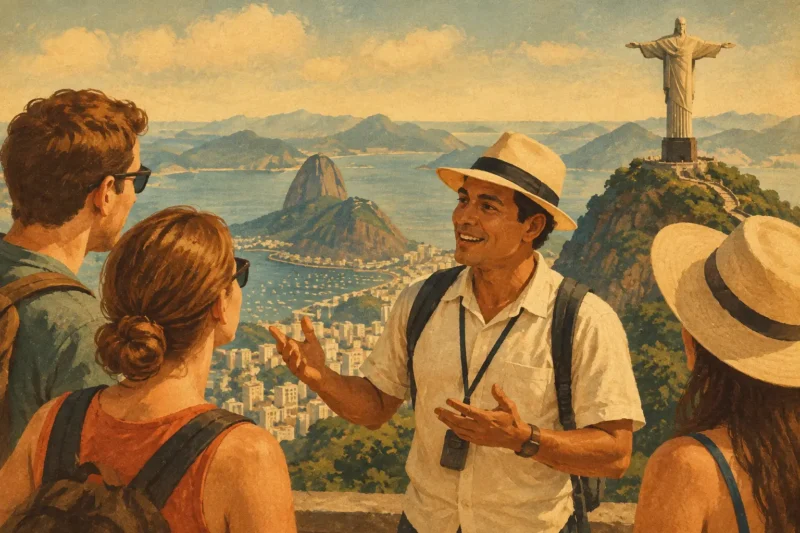
For first-time visitors to Rio, Cristo Redentor is more than a box to check. From Corcovado Mountain, you see Sugarloaf, Guanabara Bay, the beaches, the city’s dense neighborhoods, and the green sweep of Tijuca Forest in one wide panorama. It is the kind of view that gives Rio its scale. On a clear day, it earns its reputation without question.
Is the Christ the Redeemer experience worth it?
Yes, for most visitors, especially if it is their first time in Rio. The statue itself is impressive, but the setting is what makes the visit memorable. At roughly 2,330 feet above sea level, the summit feels surprisingly close to the city and far removed from its traffic at the same time.
That said, expectations matter. You will share the platform with other visitors, take photos around people, and likely encounter wind, heat, or clouds. This is not a quiet, private mountaintop experience. It is one of South America’s most visited landmarks.
The reward is strongest when you arrive with enough time to look around rather than rushing from the vehicle to a photo and back again. Couples often enjoy lingering over the changing view. Families appreciate having a guide who can keep the pace comfortable and explain what they are seeing. Mature travelers usually value avoiding unnecessary uphill walking, confusing ticket lines, and last-minute transport decisions.
What the visit is actually like
Most visitors reach Cristo Redentor by the official Corcovado train or authorized vans. The train offers a scenic ride through Tijuca Forest and can be a lovely choice when schedules line up. Vans are often more flexible and operate from designated points, including Paineiras, the visitor center below the summit.
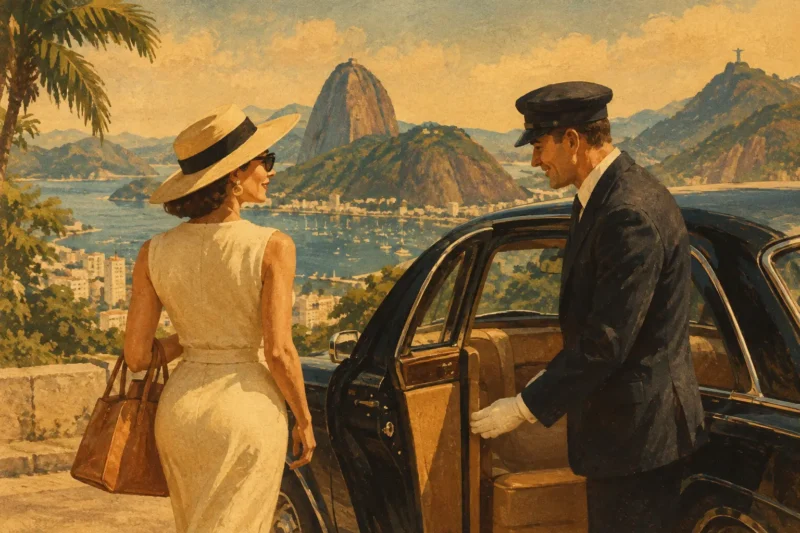
A private touring vehicle cannot simply drive all the way to the statue platform. This catches some travelers by surprise. Private transportation is still very useful: it provides a comfortable, air-conditioned ride from your hotel, cruise terminal, or other attraction to the correct departure point, with your guide handling the route and practical details. From there, you use the official transport for the final ascent.
At the top, elevators and escalators reduce much of the climb, though there can still be short walks, steps, uneven surfaces, and periods of standing. Anyone with significant mobility concerns should discuss this in advance rather than assuming the site is fully step-free. A well-planned visit can be adapted, but it should be adapted honestly.
The viewing area can feel busy, particularly from late morning through early afternoon. People naturally gather beneath the statue for the classic upward-looking photograph, while others move to the edges for views across the city. The atmosphere is energetic rather than solemn, although many visitors still find a quiet moment when they look beyond the crowds.
The view changes by the minute
Rio’s weather has a direct effect on this experience. A bright morning can turn hazy by midday, while clouds may roll across Corcovado and briefly hide the statue or the city below. There is no reliable guarantee of a perfect view, even in favorable seasons.
This is why local timing matters. Early visits often mean cooler temperatures and a better chance of clearer skies, though conditions can change quickly. A flexible private itinerary gives you more room to respond to the forecast than a fixed group schedule does. If a clear window appears, a local guide can prioritize the mountain; if clouds settle in, it may make more sense to start elsewhere and reassess.
Crowds, tickets, and the value of planning ahead
The least enjoyable version of Cristo Redentor is easy to imagine: arriving during a peak period, finding ticket availability limited, joining multiple lines, and watching port-call time disappear. Cruise passengers have an added concern. Missing a ship is not an acceptable trade-off for a landmark photo.
Advance, timed access is especially valuable on busy days, weekends, holidays, and when several ships are in port. “Skip-the-line” should be understood realistically. It generally means avoiding the main ticket-purchase line through prearranged entry, not having the entire monument to yourself or bypassing every security or boarding process. There may still be a short wait for official transport or the elevators at the summit.
What good planning does provide is certainty. You know when to leave, where to meet, which route suits the day, and how much time the stop should take. For travelers with limited hours ashore, that structure turns a potentially stressful outing into a manageable part of a larger Rio day.
Marcio Rio Tours builds private shore excursions around ship schedules, traffic patterns, and timed attraction access, leaving a sensible buffer for your return to the terminal. That practical margin matters more than trying to squeeze in one extra stop.
When should you go?
Morning is often the best choice for comfort and visibility, particularly during warmer months. You may find slightly lighter crowds, lower temperatures, and better photo conditions before haze builds over the city. But an early start is not always the right answer. Guests arriving on a later-disembarking cruise ship or traveling with young children may prefer a calmer pace and a schedule built around their needs.
Late afternoon can produce warmer light and beautiful views, but it also carries more risk if the day has become cloudy or if traffic is building for the return journey. The best time depends on your hotel location, your ship’s all-aboard time, the weather forecast, and what else you hope to see.
Avoid planning the visit as a narrow, fixed appointment immediately before an important departure. Rio traffic can be unpredictable, and mountain transport has its own rhythms. A private guide’s job is not only to show you the city, but to protect the parts of the day that cannot be missed.
Small details that improve the experience
Wear comfortable shoes with decent grip. The summit is not a strenuous hike, but polished or damp surfaces and short stair sections are easier in proper footwear. Bring water, sunscreen, sunglasses, and a light rain layer. Even on a warm day, the summit can feel breezy.
For photos, take a few classic shots, then put the camera down. The best part of the visit is often the wider view: boats crossing the bay, planes approaching Santos Dumont Airport, the curve of Copacabana in the distance, and forest pressing against the city. Your guide can point out landmarks you might otherwise miss and help you understand how Rio fits together geographically.
Keep valuables secure and carry only what you need. Corcovado itself is a managed tourist attraction, but sensible city travel habits still apply. A private vehicle also gives you a secure, comfortable place between stops instead of requiring you to navigate unfamiliar transfers with bags or extra belongings.
Who will enjoy it most?
Cristo Redentor is an excellent choice for first-time visitors, photographers, families, and anyone who wants an immediate sense of Rio’s geography. It is especially worthwhile when paired thoughtfully with another major sight such as Sugarloaf Mountain, or balanced with a neighborhood, scenic drive, or relaxed lunch.
It may be less satisfying for travelers who strongly dislike crowds, have very limited standing tolerance, or are visiting on a day with poor visibility and no schedule flexibility. In those cases, a local guide should set expectations clearly and offer alternatives rather than overselling the moment.
The landmark is famous for a reason, but the best visit does not feel like a race to a viewpoint. Give it the right window in your day, let the weather guide the order of your itinerary, and leave enough time to look out over Rio before you turn back toward the city.